

Three days in Palermo is enough — on one condition: give up on seeing everything. Palermo isn't a checklist city, it's a rhythm city: you walk, you eat, you stop. This is the itinerary we actually give friends who come to visit — three full but sustainable days, with honest timings and the mistakes worth avoiding.
Day 1: the old town and the markets
Start early, around 9am, at the Quattro Canti — the city's kilometre zero, where the light is perfect at that hour and the tour groups haven't arrived yet. Within ten minutes on foot you cover Piazza Pretoria with its "fountain of shame", the Martorana with its Byzantine mosaics, and the red domes of San Cataldo. Mid-morning, dive into Ballarò: a genuine working market where Palermitans do their shopping, and where lunch costs €5–6 — pane e panelle plus an arancina.
In the afternoon, the Cathedral (the nave is free; the rooftops cost a few euros and the view is worth every one), then Via Vittorio Emanuele down to Porta Nuova. In the evening, drinks and dinner at the Vucciria — a half-empty market by day, but after sunset it becomes the city's open-air living room.
Day 2: Arab-Norman Palermo and Monreale
Golden rule: Cappella Palatina at opening time (buy the ticket online the night before). Inside the Norman Palace, the chapel with its gold mosaics is the single most extraordinary thing in the city — at 8:30am you almost have it to yourself; by 11 it's a queue. A short walk away are the red domes and cloister of San Giovanni degli Eremiti.
From Piazza Indipendenza, take bus 389 up to Monreale (a 20–30 minute climb): the cathedral is the grand finale of Norman art, with over six thousand square metres of mosaics, and the cloister deserves its separate ticket. Mind the hours — the cathedral closes in the middle of the day for services, so check before you go up. If you'd rather be driven and add the sea, our Monreale, Borgo Parrini and Cala Muletti tour combines the cathedral, the colourful village of Parrini and a cove for a swim. Head back to the city in the afternoon; in the evening, the Teatro Massimo district for dinner.
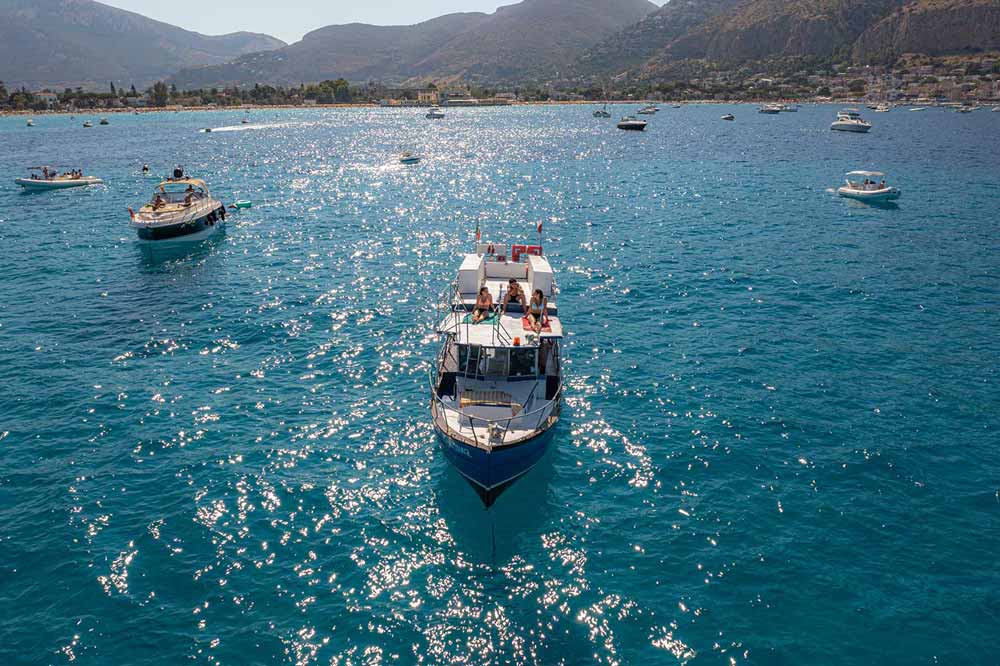
Day 3: the sea at Mondello, or a day trip
Two options, both right. First: Mondello, Palermo's own beach — a half-moon of white sand beneath Monte Pellegrino. Bus 806 gets you there in about thirty minutes; from May to October you swim, the rest of the year you walk the seafront and eat sea urchin or sfincionello from the kiosks. Second: a day trip — Cefalù by train in under an hour, Segesta, or the coast at Scopello. We've collected the best options in our guide to day trips from Palermo.
The most common mistakes
- Trying to see everything. Palermo has more monumental churches than you could visit in a week. Pick a few and actually experience them.
- Walking around at midday in August. From June to September the old town between 1 and 5pm is an oven. Do as the locals do: early morning, long break, back out at sunset.
- Sit-down lunches every day. Lunch here is street food — you'll spend a third as much and eat better.
- Ignoring church hours. Almost all of them close in the middle of the day. Monuments in the morning, wandering in the afternoon.
Eating well on a budget
€10–15 a day covers excellent market and fry-shop lunches; in the evening, an old-town trattoria comes to €20–25 a head. There's only one trick: eat where you hear Palermitan being spoken.
If you want to understand the city beyond the monuments, our mafia history and present walking tour with street food is the best way to give context to everything you'll see over the three days. For the rest — sea, cooking, rooftops — every experience is on our booking page.


