

There's a stretch of the year when Palermo belongs to the Palermitans again, and it runs from October to April. The cruise ships thin out, flights cost a third of the summer price, and the city stops being a backdrop and goes back to being a place where people live. If the summer crowding of Europe's art cities wears you down — and in 2026 it wears a lot of people down — this is the season to come. It's not a fallback: in many ways it's Palermo at its best.
The weather: one of Europe's mildest winters
Numbers first: in January, the coldest month, daytime highs sit between 14 and 16°C, and the sun never disappears for weeks the way it does further north. In October and November you still eat lunch outside; by March you're in shirtsleeves at midday. It rains, but in short bursts — bring an umbrella, mostly leave the heavy coat. The sea isn't for swimming (by Palermitan standards; some northern Europeans dive in happily in December), but the seafront at Mondello and the coast at Sferracavallo are walkable all year, and winter sunsets are sharper than anything August produces.
The monuments, finally empty
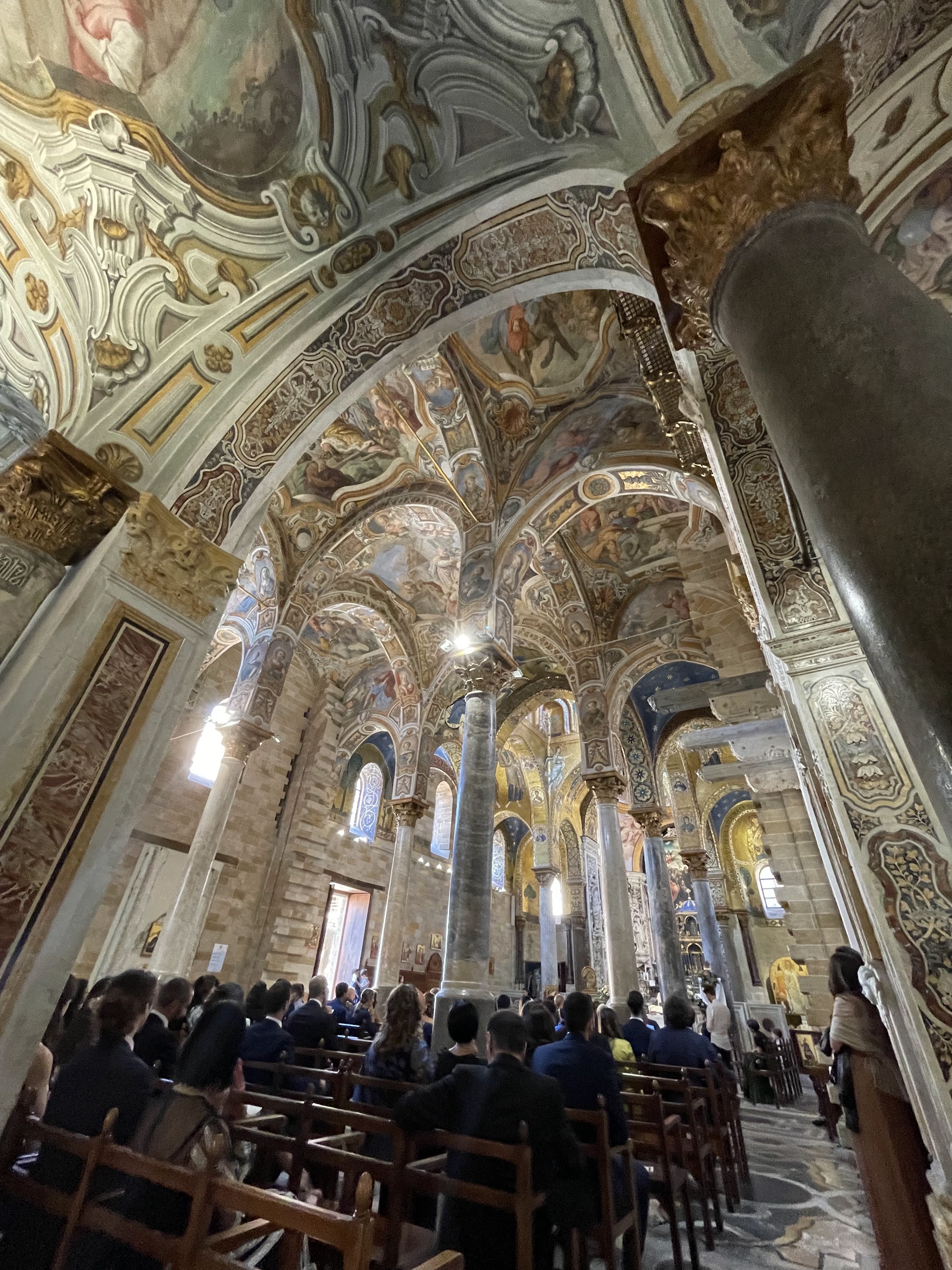
In November you can walk into the Cappella Palatina without a booking, and actually sit down and look at the ceiling. Monreale without the groups. The Cathedral rooftops with the city to yourself. It's the difference between seeing a monument and being inside it — and that alone justifies the off-season trip.
Citrus season (and real home cooking)
Winter is when the countryside around Palermo is at its best: from November to March the markets fill with Ciaculli mandarins, tarocco blood oranges, lemons and citrons. A fresh-squeezed juice costs a euro and tastes like another planet. It's also the season of true home cooking: pasta with wild broccoli "arriminati", baked anelletti, artichokes in every form, and the fried sfince di San Giuseppe in March. Brioche with gelato gives way to thick hot chocolate. You'll survive just fine.
The calendar: what happens from October to April
- November: the Day of the Dead (1–2 November), the city's most heartfelt festival after the Festino — marzipan fruit, sugar puppets and street markets.
- December: a Palermitan Christmas, with markets, open churches and handmade nativity scenes; on Santa Lucia (13 December), tradition demands you eat only cuccìa and arancine.
- February: Carnival — and ninety minutes down the road, Agrigento's Almond Blossom Festival, when the Valley of the Temples turns pink. The single best moment of the year to see it.
- March–April: Holy Week, with confraternity processions in the towns around Palermo, and a spring that here already feels like a gentle summer.
- All winter: opera and concert season at the Teatro Massimo and Politeama at accessible prices. The Festino di Santa Rosalia is in July, but the cult of the "Santuzza" lives year-round — her sanctuary on Monte Pellegrino in winter mist is an experience of its own.
What it does to your budget
Off-season, flights to Palermo from the rest of Europe often drop under €50, accommodation runs 40–60% below August rates, and restaurants have tables without a reservation. The budget for one summer week stretches to nearly two off-season — or upgrades everything.
The one honest caveat
Some seasonal businesses (beach clubs, certain boat trips) close from November to March, and the days are shorter — schedule monuments for the morning. Everything else — markets, food, museums, hiking trails, sunsets — runs at full tilt, with a relaxed city around it.
Our experiences run all year round: hiking, cooking, cultural tours and the winter sea the way we like it best — on foot, along the coast. You'll find everything on our booking page.


