

It's the question we're asked most often, usually a little sheepishly: "Is Palermo actually safe?" The short answer is yes. Palermo is a safe city for visitors, with the same precautions you'd take in Naples, Barcelona or Marseille. The long answer is more useful, because the real risks aren't the ones people imagine.
Is Palermo safe for tourists?
Yes. The old town — the Quattro Canti, the Cathedral, the markets, the Kalsa, the Teatro Massimo area — is full of life by day and in the evening, busy with Palermitans, students and visitors. The vast majority of people who come to Palermo go home without the slightest problem, and wanting to come back.
Is the mafia a danger to visitors?
No. It's the most common fear, and the least founded. The mafia is an economic criminal system — contracts, extortion, business: it has no interest in tourists and plays no part in the day of someone walking around the old town. Today's Palermo is not the Palermo of the 1980s and 90s: the city fought back, and keeps doing so. In 2004 a group of young Palermitans covered the city's walls with stickers bearing a line that became famous: "A whole people who pay the pizzo are a people without dignity." That was the start of Addiopizzo, the network of businesses that refuse to pay protection money to the mafia. At Epic Sicily we support pizzo-free businesses and include them on our tours. If you want to understand that story properly, read our guide to the history of the mafia in Palermo.
What are the real risks?
- Pickpockets in crowds. In busy markets like Ballarò and on packed summer buses, especially those to Mondello and Monreale. Backpack in front, phone in your pocket, wallet not in your back pocket.
- Traffic. The most real danger, and the one nobody mentions. Scooters come from every direction and zebra crossings are more of a suggestion than a rule. Cross decisively, looking every way.
- Unofficial parking attendants. If you arrive by car, in some areas someone will "show" you a space and ask for a few coins. It isn't dangerous, but you're better off using staffed car parks or the paid blue-line bays.
- Small scams. As in any tourist city: unlicensed taxis, prices not displayed. Use licensed taxis and always ask the price first.
Are there areas to avoid?
The outlying districts that make the crime news are far from the centre and have nothing to interest a visitor — you're very unlikely to end up there by chance. In the old town the rule is the same as in any big city: by day you can go anywhere; late at night, stay on the main streets and avoid deserted alleys. Ballarò and the Albergheria are working-class neighbourhoods, buzzing by day: explore them with curiosity, ideally in daylight.
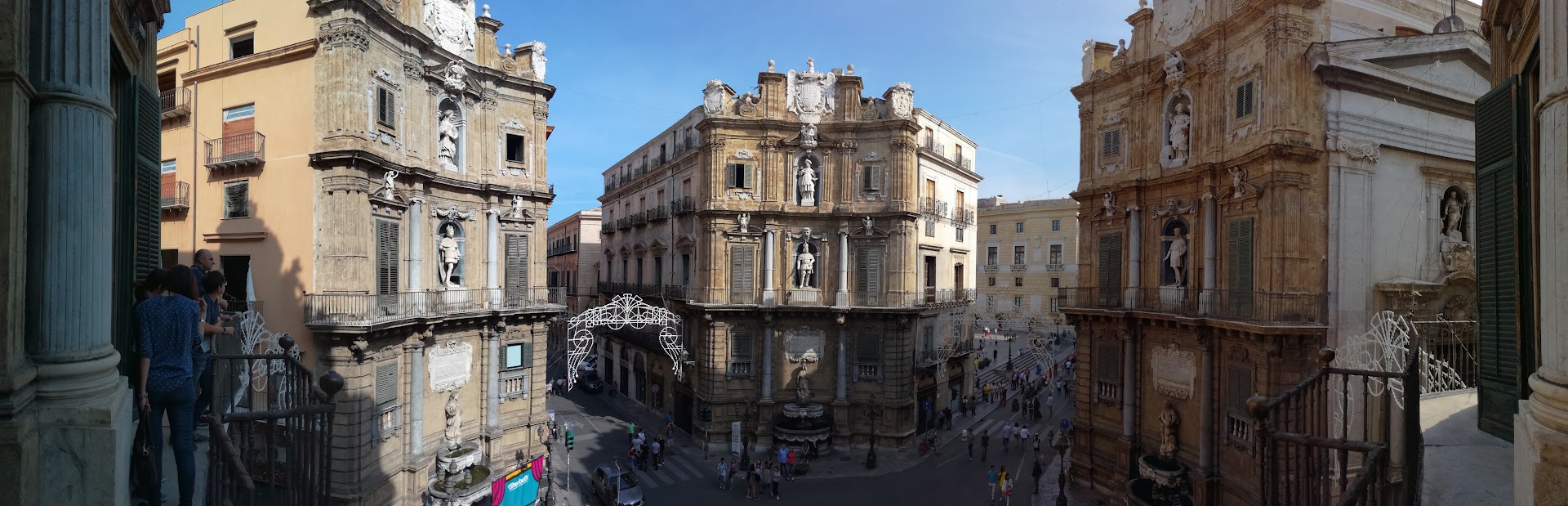
Is Palermo safe at night?
Yes — in fact the evening is one of the best times to experience it: the city fills up after sunset, especially in summer. The Vucciria, the Teatro Massimo and Via Maqueda are busy until late. We've put it all together in our guide to Palermo at night.
Is Palermo safe for solo female travellers?
Yes, with the common-sense precautions of any city: keep an eye on your belongings, avoid isolated streets late at night, take a taxi back if it's late. A small-group tour is also a great way to get to know the city — and other people — in your first days: our small-group walking tour with a local guide is designed for exactly that.
The advice we give our friends
- The single emergency number in Italy is 112.
- Carry only what you need for the day; leave the rest at your hotel.
- Enjoy the chaos of the markets, but keep your bag closed and in front of you.
- Ask Palermitans: they're direct, hospitable and happy to give advice. At our Epic Home in the Vucciria, Via Argenteria 20, there's an info point and real people who also answer on WhatsApp.
And if you'd like to explore the old town with someone who knows every corner of it, our Kalsa district walking tour takes you into the oldest quarter, past the places of Falcone and Borsellino.


